You Won’t Believe These Hidden Natural Wonders in Dunedin
Dunedin, New Zealand, is more than penguins and old stone buildings. Tucked away from the usual tourist trails are jaw-dropping natural wonders most visitors never see. I’m talking wild coastlines, silent forests, and volcanic secrets that feel untouched by time. If you're after raw beauty and real adventure, this is your kind of place. Let me show you the side of Dunedin even locals whisper about.
Beyond the Guidebooks: Rethinking Dunedin
Dunedin is often celebrated for its Scottish architecture, the royal albatross colony at Taiaroa Head, and its lively university culture. Yet for those willing to wander beyond the well-marked paths, the region reveals a quieter, more ancient soul. This is a landscape shaped by fire and ice, wind and water—where volcanic craters cradle native forests and wild coastlines echo with the calls of seabirds unseen by most tourists. The city serves not just as a cultural hub but as a gateway to some of New Zealand’s most underappreciated natural treasures.
While popular attractions have their charm, they often come with crowds, structured tours, and fixed viewing platforms. In contrast, Dunedin’s hidden landscapes offer something increasingly rare: solitude. These places do not cater to mass tourism. There are no souvenir shops at the trailheads, no loudspeaker guides narrating every rock formation. Instead, visitors find stillness, space, and a chance to move at nature’s pace. This slower, more intentional form of travel allows for deeper connection—not just with the land, but with oneself.
The shift from curated sightseeing to authentic exploration begins with mindset. It means trading checklists for curiosity, comfort for discovery. Dunedin rewards those who ask not just “What should I see?” but “Where can I feel?” The answer often lies in the folds of the land—behind a ridge, beyond a bend in a river, or down a gravel road with no signage. These are not destinations for the passive observer. They call to the mindful traveler, the one who values experience over exposure, presence over photographs.
Importantly, these hidden wonders are not hidden because they are inaccessible. Many are within an hour’s drive from the city center or reachable via well-maintained trails. Their obscurity comes not from difficulty but from lack of promotion. They exist outside the mainstream narratives, preserved in part by their quiet reputation. For those who seek them, they offer a chance to witness nature as it endures—not as it is staged.
The Volcanic Heart: Exploring the Dunedin Volcanic Complex
Beneath Dunedin’s streets and hills lies a geological story millions of years in the making. The city sits within the Dunedin Volcanic Complex, a massive field of extinct volcanoes that began forming over 16 million years ago. Though long dormant, the volcanic legacy is visible in nearly every direction—through the sweeping curves of the Otago Harbour, the rugged profiles of surrounding hills, and the basalt columns that emerge like ancient sentinels from the earth. This is not a dramatic landscape of smoking peaks, but one of subtle power, shaped by time and erosion into something deeply beautiful.
One of the best ways to understand this volcanic past is to walk it. Trails up Mount Cargill, at 676 meters, offer panoramic views across the city, the peninsula, and the Pacific Ocean. On clear days, the horizon stretches endlessly, revealing the curvature of the earth. The climb itself is moderate, taking about two hours round-trip, and passes through native bush, open grasslands, and rocky outcrops. Along the way, interpretive signs explain how magma once rose through fissures, forming intrusions that cooled into the hard rock now exposed by centuries of weathering.
Flagstaff, another prominent peak in the complex, provides a different kind of experience. Less frequented than Mount Cargill, it offers a sense of quiet discovery. From its summit, the view includes the sinuous shape of the volcanic crater that once held a lake—now drained and filled with farmland and forest. The trail is well-formed but not crowded, making it ideal for families or solo walkers seeking reflection. At dawn, the hill is often wrapped in mist, giving the feeling of walking above the world.
For the more adventurous, guided geological walks led by local experts offer deeper insight into the region’s formation. These tours, often organized through the Otago Natural History Club or the Department of Conservation (DOC), explain how the volcanic activity created fertile soils, shaped waterways, and influenced settlement patterns. They also highlight safety considerations—such as avoiding cliff edges and checking weather conditions—since southern New Zealand weather can shift rapidly, especially at elevation.
Visitors should come prepared with sturdy footwear, layers for changing temperatures, and plenty of water. While these hikes are not technical, they demand respect for the terrain. But the reward is more than a view. It is a chance to stand on land that has witnessed epochs, to feel the deep time beneath your feet, and to understand how geology continues to shape life in Dunedin today.
Coastal Secrets of the Otago Peninsula’s Wild Side
The Otago Peninsula is best known for its wildlife—the yellow-eyed penguins of Penguin Place, the northern royal albatross at the Orokonui Ecosanctuary. But while these conservation sites draw visitors from around the world, the peninsula’s true coastal drama unfolds farther east, where the land meets the open Pacific. Along this rugged stretch, few venture beyond the main road, missing a coastline of raw, untamed beauty. Here, sea stacks rise like broken teeth from the surf, blowholes erupt with thunderous booms, and hidden coves cradle pools of emerald water.
One such gem is Victory Beach, accessible via a short walk from a modest parking area. Unlike the guarded penguin viewing areas, this beach is unstructured, unmonitored, and unforgettable. Waves crash against black sand, sending plumes of spray into the air. The sound is constant—a deep, rhythmic roar that drowns out all other noise. Along the shore, tide pools teem with life: anemones, crabs, and tiny fish that dart between rocks. At low tide, the exposed reef reveals channels and caves, perfect for careful exploration.
Equally compelling is the walk from Allans Beach to Sandfly Bay. Though Sandfly Bay is known for its seal colony, the path along the cliffs offers a different kind of encounter. The trail winds through tussock grass and low scrub, offering sudden views of the ocean far below. Seabirds—gulls, petrels, and the occasional shag—wheel overhead, their cries carried on the wind. On calm days, the water appears glassy; in stormy weather, it churns with power. The contrast is part of the peninsula’s magic: it is both fragile and fierce.
Visitors should pay close attention to tide times, as some paths become impassable or dangerous during high tide. Waterproof boots with good grip are essential, as rocks can be slippery with algae. It’s also important to maintain a safe distance from seals and nesting birds. These animals are protected, and stress from human presence can impact their survival. DOC recommends staying at least 20 meters away and keeping dogs leashed or at home.
What makes these coastal walks special is not just their beauty but their sense of discovery. There are no fences, no loudspeakers, no timed entry. You arrive when you choose and stay as long as the light allows. The experience is personal, intimate, and deeply grounding. In a world of curated content and instant access, this kind of unscripted encounter with nature is a rare gift.
Valley of Silent Giants: The Hidden Waterfalls of Silverpeaks
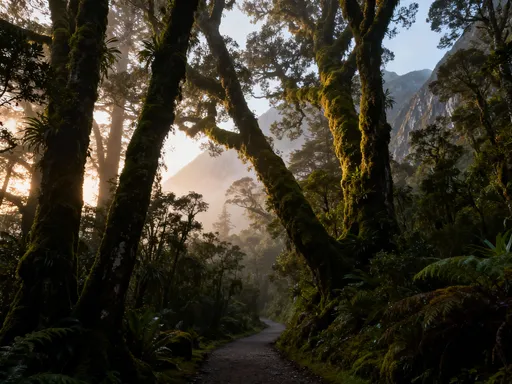
Northwest of Dunedin, beyond the reach of tour buses and paved highways, lies the Silverpeaks Forest—a quiet expanse of native bush, rolling hills, and hidden waterways. This is a place of moss and mist, where centuries-old beech trees arch over narrow tracks and streams murmur through fern-covered gullies. Few tourists make it here, but those who do are rewarded with a sense of stepping into another world—one where time slows and the only sound is the rustle of leaves in the wind.
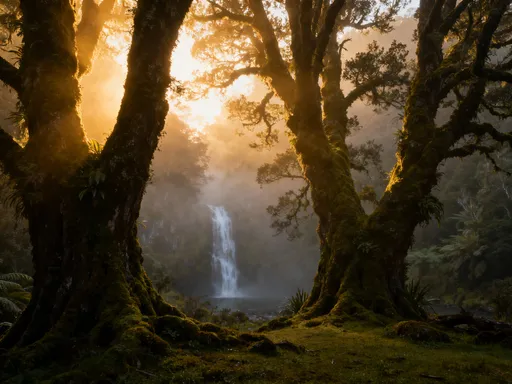
The Silverpeaks are home to several secluded waterfalls, including Witches Falls and Turbot Waterfall, each tucked deep within the forest. These are not towering cascades like those in Fiordland, but delicate, intimate falls that feel like secrets shared only with those who take the time to seek them. Witches Falls, for instance, drops about 15 meters through a curtain of green, surrounded by thick moss and tree roots that seem to cradle the water as it falls. The path to reach it is unmarked in places, requiring careful navigation and a good map or GPS.
The journey is part of the experience. The main access is via the Silverpeaks Road, a gravel track that winds through farmland before entering the conservation area. From there, hikers follow the Turbot Valley Track, a moderate trail that climbs gradually through regenerating forest. The track is well-maintained but not crowded, and signage is minimal—encouraging self-reliance and attentiveness. Along the way, native birds like the tūī and bellbird flit between branches, their songs echoing through the trees.
These waterfalls are not Instagram-famous, and that is precisely their value. They offer peace over popularity, quiet over queues. They are places to sit on a damp log, listen to the water, and breathe in the clean, earthy air. For parents, they provide a chance to teach children about patience, navigation, and respect for wild spaces. For solo travelers, they offer solitude and reflection.
Because the area is remote, preparation is key. Visitors should carry a detailed topographic map, a compass or GPS device, and emergency supplies. Mobile phone coverage is unreliable, and weather can change quickly. But for those who come ready, the Silverpeaks deliver a rare kind of fulfillment—one that comes not from seeing something spectacular, but from being fully present in a place that feels untouched.
Lakes and Lagoons: Dunedin’s Quiet Inland Gems
Just a short drive from the city, Dunedin’s inland lakes offer a different rhythm of travel. These are not dramatic alpine lakes, but gentle, glacial-formed bodies of water nestled in rolling farmland and wetland. Lake Mahinerangi, created by a hydroelectric dam but fed by natural catchments, stretches for kilometers through forested hills. Lake Waihola, shallower and reed-lined, is a haven for waterfowl and a favorite among local anglers. Together, they represent a quieter side of the region—one focused on stillness, observation, and connection with freshwater ecosystems.
At Lake Mahinerangi, visitors can launch kayaks or paddleboards from the public access point near the dam. The water is calm, often mirror-like in the early morning, reflecting the surrounding hills. Paddling along the shoreline, it’s common to see shags drying their wings on logs, herons stalking fish in the shallows, and even the occasional New Zealand dabchick diving beneath the surface. The lake is also popular for trout fishing, with both brown and rainbow trout stocked regularly.
Lake Waihola, though smaller, has a charm all its own. Surrounded by wetlands, it supports a rich diversity of birdlife, including the endangered black-billed gull and the Australasian bittern. A walking track loops around part of the lake, offering views across the reeds and opportunities to spot wildlife without intrusion. The area is also known for its eel fisheries, a traditional food source for local Māori, though commercial operations are now regulated to protect sustainability.
Accommodation near these lakes tends to be low-key—holiday homes, DOC campsites, and small lodges that blend into the landscape. There are no high-rise hotels or bustling marinas. Instead, visitors find peace, star-filled skies, and the sound of frogs at dusk. This is slow travel in its purest form: waking with the sun, spending the day on or beside the water, and retiring early with a book and a warm drink.
Because these ecosystems are fragile, responsible recreation is essential. Visitors are encouraged to clean boats and gear to prevent the spread of invasive species, avoid feeding wildlife, and take all rubbish with them. The DOC provides guidelines at access points, emphasizing that these lakes are not just for today’s visitors but for future generations. By following these practices, travelers help ensure that Dunedin’s inland waters remain clear, quiet, and full of life.
Why Off-the-Beaten-Path Matters: Sustainability and Experience
Choosing to explore Dunedin’s lesser-known natural sites is not just a personal preference—it is an act of care. Popular attractions, while important for education and conservation funding, often face pressure from high visitor numbers. Trails erode, wildlife becomes stressed, and the sense of wildness diminishes. By shifting focus to quieter areas, travelers help distribute impact and protect the very places they come to enjoy.
This kind of travel also fosters a deeper, more meaningful experience. When you are not competing for a view or rushing through a timed tour, you have space to notice details: the way light filters through leaves, the pattern of bird calls at dawn, the feel of cool air rising from a forest stream. These moments of presence are what stay with us long after the trip ends. They form the quiet core of memory, more lasting than any photograph.
Moreover, off-the-beaten-path exploration often requires more preparation and self-reliance, which in turn builds confidence and respect for nature. Reading a map, checking weather forecasts, packing appropriately—these acts ground us in reality and remind us that we are guests in a larger world. They counter the illusion of control that modern travel can create, reconnecting us with the unpredictability and wonder of the natural world.
From an environmental standpoint, visiting remote areas with low carbon footprints—by foot, bike, or shared transport—reduces overall impact. Staying longer in one region rather than hopping between destinations also supports local economies more sustainably. Small lodges, family-run cafes, and community conservation projects benefit directly from mindful travelers who value authenticity over convenience.
The philosophy behind this approach is simple: take only photos, leave only footprints, and carry away only memories. It is a principle promoted by the Department of Conservation and embraced by many New Zealanders. By following it, visitors honor the land and its guardians, both human and natural. In doing so, they become part of a larger story—one of preservation, respect, and quiet joy.
Putting It All Together: Crafting Your Own Dunedin Adventure
Planning a trip around Dunedin’s hidden natural wonders doesn’t require expert skills—just curiosity, preparation, and a willingness to embrace the unexpected. The key is to start with a flexible framework rather than a rigid itinerary. Choose a base—perhaps a quiet cottage in Portobello, a DOC campsite near Silverpeaks, or a lakeside lodge at Waihola—and build day trips around it. This allows for rest, reflection, and responsiveness to weather and energy levels.
Begin by consulting official resources. The Department of Conservation website offers up-to-date trail conditions, safety alerts, and printable maps. Local i-SITE visitor centers in Dunedin and Portobello can provide personalized advice, including which tracks are best for families, which require more experience, and where to find supplies. Many also stock regional guides and birdwatching checklists, adding educational value to the journey.
Packing smart is essential. Layers are crucial—New Zealand’s coastal and forest climates can shift from sunny to rainy in hours. A waterproof jacket, sturdy hiking boots, and quick-dry clothing are non-negotiable. Other essentials include a first-aid kit, a headlamp, a thermos for hot drinks, and high-energy snacks. For those venturing into remote areas, a personal locator beacon (PLB) or satellite messenger is a wise addition.
When planning activities, balance adventure with rest. A morning hike to Mount Cargill can be followed by a quiet afternoon reading by the lake. A coastal walk on the peninsula might end with a warm meal at a local café. The goal is not to see everything, but to feel what you do see. Let the pace of nature guide you.
Finally, embrace the spirit of discovery. Some of the best moments will not be on any map: a sudden rainbow over the harbor, a deer stepping from the trees, a perfect stillness at dawn. These are the gifts of off-the-beaten-path travel. They remind us that adventure is not about distance, but about attention. By slowing down, looking closely, and moving with care, travelers don’t just visit Dunedin—they connect with it.
Dunedin’s true character isn’t in its museums or main streets, but in the quiet rustle of its forests, the echo of waves on empty shores, and the stillness of ancient volcanic hills. These off-the-beaten-path natural wonders offer something rare: authenticity, solitude, and wonder. By stepping beyond the expected, travelers don’t just see a place—they feel it. And in a world of crowded destinations, that’s priceless.