Wandering Through Time: Damascus’ Soul Lives in Its Streets and Stones
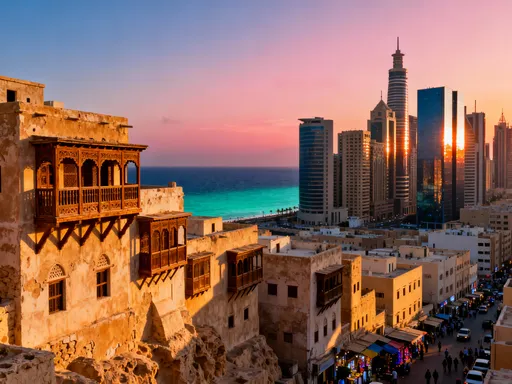
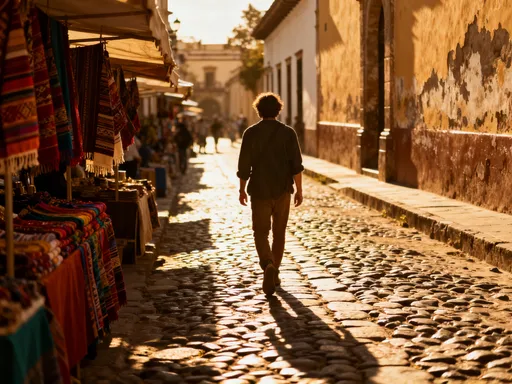
You know that feeling when a city just pulls you in? That’s Damascus. I didn’t visit—I wandered. No strict itinerary, just footsteps on ancient stones, guided by call to prayer and the scent of cardamom coffee. Every alley seemed to whisper history, and every landmark felt alive. From the Umayyad Mosque’s grand arches to hidden courtyard houses, this city isn’t just old—it breathes. If you crave places where time folds into the present, Damascus will rearrange your soul.
The Pulse of Old Damascus
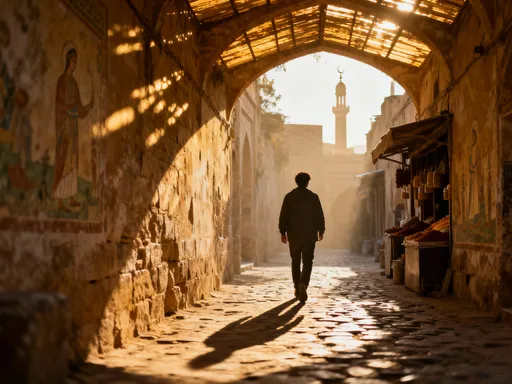
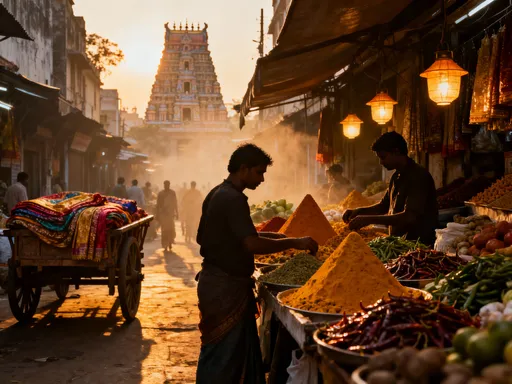
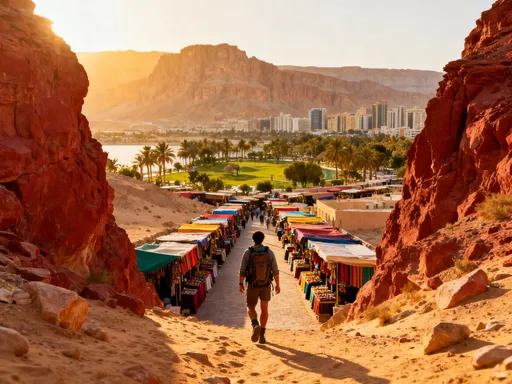
Walking through Al-Hamidiyah Souq is like stepping into a living tapestry woven from centuries of trade, scent, and sound. The air hums with energy as merchants call out in rhythmic Arabic, their voices rising above the clatter of copper pots and the rustle of silk. Sunlight filters through high vaulted ceilings in golden shafts, illuminating mounds of crimson sumac, golden saffron, and deep brown coffee beans piled high in woven baskets. The scent of warm bread, roasting nuts, and spiced lamb fills narrow passageways where shoppers jostle gently, inspecting hand-embroidered textiles or pausing at a tray of freshly made qatayef. This is not a marketplace designed for tourists—it is the beating heart of daily life in Damascus, where generations have bought, bartered, and bonded over shared tastes and traditions.
Yet just steps from this sensory whirlwind lies a sudden stillness. As you pass through an arched gateway, the noise recedes like a tide, and the vast courtyard of the Umayyad Mosque unfolds before you. The shift is profound—one moment you are immersed in commerce, the next in contemplation. Children play quietly near fountains, elders sit on stone benches reading Qurans, and the scent of incense lingers in the air. This contrast is not accidental; it is woven into the city’s DNA. Damascus has always been a place where the sacred and the secular coexist, not in opposition, but in harmony. The rhythm of the city rises and falls with your footsteps: fast in the souq, slow in the mosque, and somewhere in between as you wander deeper into its ancient veins.
What makes Damascus truly unforgettable is not found in guidebooks or timed tours, but in the decision to wander without a map. Rushing through its alleys means missing the quiet courtyard where a grandmother waters jasmine plants, or the moment a shopkeeper invites you for tea after noticing your interest in his hand-carved boxes. The city reveals itself gradually, like a story told in fragments. Choosing to walk slowly, to pause, to let curiosity guide you—this is how Damascus opens its doors. It rewards patience with intimacy, offering glimpses into lives lived with dignity, faith, and quiet pride. In a world obsessed with efficiency, Damascus reminds us that some journeys are not about distance covered, but depth experienced.
Umayyad Mosque: Where History Stands Still
Rising with quiet majesty in the heart of Old Damascus, the Umayyad Mosque is more than a place of worship—it is a testament to endurance, artistry, and shared heritage. Completed in the early 8th century under the Umayyad Caliph Al-Walid I, it stands on a site that has been sacred for millennia, once home to a Roman temple dedicated to Jupiter and, before that, a Christian basilica honoring John the Baptist. This layering of faiths is not hidden; it is celebrated. Within the mosque’s walls, a small shrine is believed to house the head of John the Baptist, a figure revered in both Islam and Christianity, drawing pilgrims from both traditions over centuries.
The architectural brilliance of the mosque lies in its synthesis of styles. Massive columns, some salvaged from Roman ruins, support horseshoe arches that lead into a vast prayer hall bathed in soft light from arched windows. Mosaics depicting idyllic landscapes—flowing rivers, palm trees, and golden domes—stretch across the courtyard walls, crafted by Byzantine artisans under Islamic patronage. These are not mere decorations; they are visions of paradise, inviting reflection and awe. The central dome, known as the Dome of the Eagle, soars above the courtyard, while two towering minarets—one built during the Abbasid era, another during the Mamluk period—anchor the skyline. Every stone tells a story of empire, devotion, and cultural exchange.
For visitors, the mosque offers both spiritual serenity and historical immersion. Non-Muslims are welcome to enter during non-prayer hours, provided they dress modestly—women should cover their hair, and both men and women should wear clothing that covers shoulders and legs. Shoes are removed before stepping onto the cool marble floors. While the atmosphere is peaceful, it is not a museum frozen in time. Prayer calls echo five times a day, and during Friday prayers, the courtyard fills with worshippers in quiet unison. To visit then is to witness living tradition. For a deeper understanding, a local guide can illuminate details often missed—the symbolism of the mosaics, the significance of the prayer niche (mihrab), or the evolution of the minarets.
Timing your visit enhances the experience. Early morning, just after sunrise, offers soft light and fewer crowds, ideal for photography and contemplation. Late afternoon, as the sun begins to dip, casts a golden glow across the mosaics, transforming the courtyard into a luminous sanctuary. Whether explored alone or with a guide, the Umayyad Mosque stands as a bridge between past and present, inviting all who enter to pause, reflect, and feel the weight of centuries in the stillness.
The Houses of Old Damascus: Living Heritage
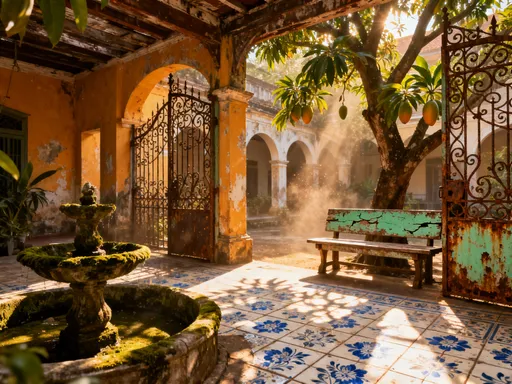
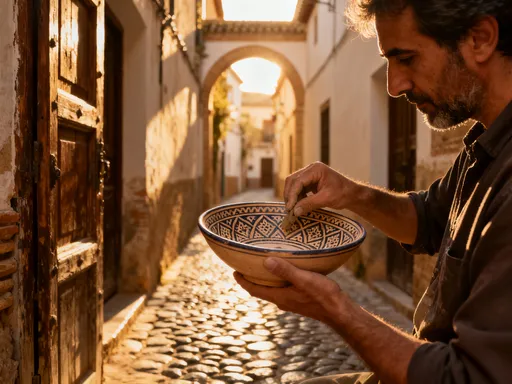
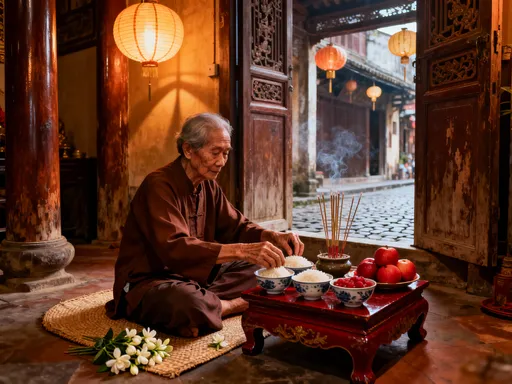
Behind unassuming stone doors in the winding alleys of Old Damascus lie some of the city’s most exquisite treasures—traditional courtyard houses that have sheltered families for generations. These homes, built during the Ottoman era and earlier, are masterpieces of domestic architecture, designed for privacy, comfort, and beauty. At their center lies a tranquil courtyard, often with a fountain or small garden, where light and air circulate freely. Around it, rooms open through ornate wooden arches, their ceilings painted with floral motifs in soft blues, greens, and golds. Intricate *mashrabiyya* screens—latticed wooden windows—allow residents to observe the street without being seen, offering both ventilation and modesty.
What makes these houses remarkable is not just their craftsmanship, but their continuity. Unlike museum reconstructions, many of these homes are still lived in, their courtyards echoing with the sounds of daily life—children laughing, pots clinking in the kitchen, the rustle of prayer beads. Others have been carefully restored and repurposed as cultural centers, artisan workshops, or boutique guesthouses, allowing visitors to experience their elegance firsthand. Staying in one, even for a single night, is to step into a slower, more deliberate way of living—one where time is marked by sunlight shifting across marble floors, not by digital clocks.
Accessing these homes requires respect and sometimes invitation. Some are open to the public during cultural festivals or heritage days, when Damascenes proudly share their homes with visitors. Others can be visited through organized tours that support local preservation efforts. Whether you sip tea in a restored salon with hand-painted walls or admire a *mashrabiyya* crafted by a master carpenter, these spaces reveal a deeply personal dimension of Damascus—one that official monuments cannot convey. They speak of family, memory, and the quiet pride of maintaining tradition in a changing world.
In a city where survival has often meant adaptation, these houses stand as acts of resistance—against erasure, against haste, against forgetting. They remind us that heritage is not only in grand mosques or ancient walls, but in the way people live, gather, and care for their homes. To walk through one is to touch the intimate pulse of Damascus, where beauty is not displayed for show, but woven into the fabric of everyday life.
Mount Qasioun: The City’s Silent Watcher
Rising gently to the northwest of the old city, Mount Qasioun has watched over Damascus for thousands of years. More than a geographical feature, it is a symbol—a quiet guardian offering perspective, peace, and one of the most breathtaking views in the Levant. As the sun begins its descent, locals gather along its slopes, finding benches beneath olive trees or spreading blankets on the grass. Children fly kites, couples stroll hand in hand, and elders sip tea while gazing at the city below. This is not a tourist spectacle; it is a daily ritual, a moment of collective pause in the rhythm of urban life.
From the summit, Damascus unfolds like a living mosaic. Terracotta rooftops stretch in every direction, interrupted by the silver domes of mosques and the slender minarets that pierce the sky. The Barada River winds through the city like a silver thread, feeding gardens and orchards that have nourished Damascus since antiquity. As daylight fades, the city lights begin to flicker on, first in clusters, then in waves, until the entire valley glows like embers. The call to prayer rises from multiple directions, blending into a haunting chorus that echoes against the mountain’s face. In that moment, time seems to still. The city’s complexities—the weight of history, the challenges of the present—soften into something beautiful, almost sacred.
Reaching Mount Qasioun is straightforward. Taxis can take you to the main viewing areas within minutes from the city center, and many visitors choose this option, especially in the evening. For the more adventurous, walking trails begin near the edge of the old city, winding upward through olive groves and stone pathways. While the climb is moderate, sturdy shoes and water are recommended, especially in warmer months. Security in the area is generally stable, particularly in well-traveled spots, but it is wise to check local conditions and avoid isolated paths after dark.
The mountain holds a special place in Damascene identity. Local tradition holds that Noah’s Ark came to rest here after the flood, though this belief is more symbolic than doctrinal. More importantly, Mount Qasioun represents continuity—a place where generations have come to breathe, reflect, and reconnect with the city they love. For travelers, it offers emotional clarity. After days of navigating crowded souqs and absorbing centuries of history, standing atop Qasioun allows you to step back, literally and figuratively, and see Damascus as a whole. It is not just a view; it is a moment of understanding.
The Straight Street (Via Recta): Layers of Faith and Trade
Today known as Al-Shari’ al-Mustaqim, the Straight Street is one of the oldest continuously used roads in the world. Originally built by the Romans as the *Via Recta*, it stretched nearly a kilometer from the eastern to the western gates of the city, serving as a vital artery for trade and military movement. Unlike the winding alleys of the souq, this broad avenue was engineered for efficiency and grandeur, flanked by colonnades and lined with shops even in antiquity. Its significance deepened with the arrival of Christianity—according to the Acts of the Apostles, it was here that Saul of Tarsus, blinded by divine light, was led to the house of Judas on Straight Street, where he regained his sight and became the Apostle Paul.
Walking along this historic route today, you feel the weight of those layers. The ancient stones are still beneath your feet, though covered now by modern pavement in parts. The road remains a bustling commercial corridor, filled with shops selling everything from religious icons to textiles, spices, and sweets. Christian and Muslim communities live and work side by side, their places of worship standing in quiet proximity. The Church of St. Ananias, believed to be built over the home where Saul was healed, lies just off the main street. Its underground crypt, cool and dimly lit, contains remnants of Roman-era structures, linking the present to the ancient past in a single space.
What makes the Straight Street remarkable is not just its history, but its ongoing role as a space of coexistence. For centuries, Damascus has been home to diverse religious communities, and this street embodies that reality. A Muslim shopkeeper might offer you tea while discussing the church next door; a Christian family might run a bakery famous for its ma’amoul cookies, sold to customers of all faiths. Commerce and spirituality have always intertwined here—pilgrims once traveled this road seeking healing or conversion, just as merchants brought goods from distant lands. Today, that spirit continues, not as a relic, but as a lived experience.
Walking the Straight Street is to trace a thread that connects empire, faith, and daily life. It reminds us that cities are not static monuments, but evolving stories. The same road that carried Roman soldiers now carries schoolchildren and tourists. The same shops that sold olive oil to early Christians now sell mobile phone cases. Yet through all change, something endures—a sense of continuity, of shared space, of resilience. To walk this street is to walk through time, not as a spectator, but as a participant in a story still being written.
Choosing Damascus: Why This City Now
Many hesitate to visit Syria, and that hesitation is understandable. Decades of conflict have left scars, and international advisories still caution against travel to certain regions. Yet within this context, Damascus’ historic core remains a place of remarkable stability and warmth. For culturally curious travelers—especially women aged 30 to 55 seeking meaningful, authentic experiences—this city offers something rare: a destination untouched by mass tourism, where human connection still matters more than transactions. The people of Damascus welcome visitors not as customers, but as guests, offering tea, stories, and quiet hospitality with genuine openness.
Choosing to visit Damascus is not about ignoring challenges; it is about recognizing resilience. The city has endured, and in doing so, it has preserved treasures that cannot be replicated. Tourism, when done responsibly, supports local artisans, preservation efforts, and small businesses that depend on cultural exchange. Every purchase of handmade soap in the souq, every night spent in a restored courtyard guesthouse, every guided tour with a local historian contributes to the city’s revival. It is a form of travel that honors the past while supporting the present.
For women travelers, Damascus is generally safe, particularly in the old city and well-known neighborhoods. Modest dress is appreciated and helps foster respect, but it does not hinder access. English is spoken in many cultural sites and hotels, and local guides are knowledgeable and welcoming. The pace of life encourages reflection, making it ideal for those seeking depth over distraction. This is not a destination for luxury resorts or fast-paced sightseeing—it is for those who value history, culture, and human warmth above comfort.
In a world where so many cities feel homogenized, Damascus stands apart. It does not perform for tourists; it simply lives. To visit is to witness a different way of being—one rooted in tradition, faith, and community. It is not always easy, but it is always meaningful. And in choosing to go, you do more than see a new place—you help keep its soul alive.
Wandering as a Way of Travel
In Damascus, the most profound moments often come from what is not planned. The magic lies not in checking off landmarks, but in the unplanned pause—a conversation with a carpet seller who shares stories of his grandfather, the scent of orange blossoms drifting from a hidden garden, the sound of a child’s laughter echoing in a stone alley. This is the power of wandering: it opens space for serendipity, for connection, for wonder. Unlike checklist tourism, which measures success by quantity of sights seen, wandering measures depth of experience. It asks not how much you’ve done, but how deeply you’ve felt.
Wandering requires trust—in yourself, in the city, in the idea that getting lost can lead to discovery. It means setting aside the map, silencing the itinerary, and letting curiosity be your compass. In Damascus, this approach is not just rewarding—it is essential. The city does not reveal itself to those who rush. Its secrets are tucked behind unmarked doors, whispered in quiet courtyards, shared over glasses of mint tea. A shopkeeper might invite you to sit, not to sell, but to talk. A local might point you toward a hidden mosque with a 1,000-year-old door. These are not experiences you can book; they happen only when you are present, open, and unhurried.
For many women, especially those balancing family, work, and personal reflection, wandering offers a rare freedom. It is a chance to step outside roles and routines, to move at your own pace, to listen to your instincts. In Damascus, this becomes a form of mindfulness—a way of traveling with intention, awareness, and heart. You begin to notice small things: the pattern of light on a wall, the rhythm of a prayer call, the warmth of a smile from a stranger. These moments accumulate, forming a deeper understanding of a place—and of yourself.
Wandering is not aimlessness. It is attention. It is respect. It is love for the unexpected. In Damascus, where time feels layered and alive, this way of travel becomes a bridge between past and present, between visitor and resident, between seeing and knowing. It transforms a trip into a journey—one that lingers long after you’ve returned home.
Damascus doesn’t give up its secrets to hurried footsteps. Its landmark buildings aren’t just monuments to visit—they’re living fragments of a story still unfolding. To wander here is to walk through layers of time, faith, and resilience. For those willing to listen with their feet, the city offers not just sights, but a transformation. Let go of plans. Follow the alleys. Let Damascus find you.