You Gotta See How Madurai’s Markets Come Alive at Dawn
There’s something electric about Madurai before the sun fully rises—the scent of jasmine and spice fills the air, temple bells echo in the distance, and the city’s commercial heart starts to pulse. I wandered through bustling lanes where silk saris shimmer under fluorescent lights and street vendors call out their morning specials. This isn’t just shopping; it’s a sensory journey into South India’s soul. Let me take you where commerce meets culture—from vibrant bazaars to hidden alleyway stalls that define daily life here.
The Rhythm of Commerce in a Temple City
Madurai is not merely a city with a temple at its center—it is a temple that grew into a city. The Meenakshi Amman Temple, with its towering gopurams painted in vivid mythological scenes, stands as both a spiritual and economic nucleus. For centuries, pilgrims have flocked to this sacred site, and with them, traders, artisans, and food sellers have followed, establishing a commercial ecosystem finely tuned to the rhythms of prayer and festival. Nearly every major market in Madurai lies within a two-kilometer radius of the temple, a testament to how deeply faith and trade are intertwined.
The daily rituals of the temple—morning ablutions, midday offerings, and evening aarti—dictate the tempo of the city’s economic life. Vendors open their stalls just before dawn to serve early worshippers, while flower sellers arrange marigold garlands and jasmine strands long before the first bells ring. During festivals like Chithirai, which celebrates the divine wedding of Meenakshi and Sundareswarar, the city transforms into a month-long fair. Streets swell with processions, foot traffic multiplies, and sales spike across all market segments, from textiles to sweets. This fusion of devotion and commerce creates a unique urban rhythm, where spiritual fulfillment and material exchange coexist in harmonious balance.
What makes this system so resilient is its self-sustaining nature. The temple draws people, people create demand, and local vendors meet that demand with goods rooted in regional tradition. It’s a cycle that has endured for over a thousand years, adapting to modern pressures without losing its essence. Even today, many shopkeepers begin their day with a brief visit to the temple, offering a prayer before unlocking their shutters. This practice is more than ritual—it’s a symbolic alignment of purpose, reminding everyone that business here is not just transactional but also deeply communal.
Gundu Market: The Morning Pulse of Fresh Produce
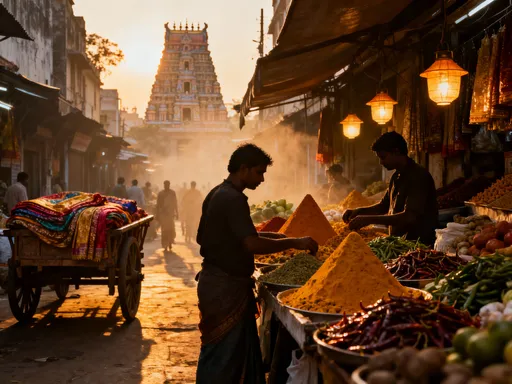
If the temple is Madurai’s spiritual heart, then Gundu Market is its digestive system—vibrant, essential, and operating at full throttle before most of the city wakes. Officially known as Periyakoil Sandhai, this market is affectionately called “Gundu” (meaning “round” in Tamil) due to its circular layout around a central traffic roundabout. By 4:30 a.m., trucks and bullock carts alike begin unloading crates of seasonal produce: pyramids of mangoes, bundles of bitter gourd, baskets of drumsticks, and mounds of fragrant curry leaves. The air hums with barter, calculation, and the occasional burst of laughter as farmers negotiate prices with shop owners and home cooks.
Gundu Market serves as the primary wholesale hub for fresh vegetables and fruits in Madurai, supplying not only local households but also roadside eateries, temples, and caterers. Its reputation for freshness is unmatched, largely because most vendors source directly from nearby villages in the Vaigai River basin, where fertile soil and traditional farming methods yield high-quality crops. Seasonality plays a crucial role here—during summer, stalls overflow with water-rich gourds and mangoes; in the cooler months, root vegetables and leafy greens dominate. This deep connection to the agricultural calendar ensures that what’s available is not only fresh but also nutritionally appropriate for the season.
Pricing in Gundu Market is dynamic, shaped by supply, demand, and the arrival time of goods. Early buyers—usually experienced vendors—get the best picks and lowest rates, while latecomers sift through what remains. For visitors, the experience is less about purchasing and more about witnessing the precision of a well-oiled system. Watch as women in cotton sarees weigh vegetables on brass scales, or how a single crate of tomatoes changes hands three times before sunrise, each transfer marked by a quick mental calculation and a nod of agreement. Cash remains king here; digital payments are rare, preserving a tactile, human-centered economy that feels increasingly rare in the modern world.
Despite the chaos, there’s an underlying order. Vendors are grouped by product type—leafy greens on one side, tubers on another, fruits near the eastern exit—making navigation easier for regulars. Sanitation has improved in recent years, with municipal teams conducting daily clean-ups and waste segregation efforts. Still, visitors should wear comfortable shoes and be prepared for the sensory overload: the earthy smell of soil, the sharp tang of overripe jackfruit, and the constant chorus of voices calling out prices. To truly appreciate Gundu Market, one must arrive early, move slowly, and embrace the messiness of real life.
Sowcarpet & East Market Street: A Shopper’s Labyrinth
Just beyond the temple’s eastern gateway lies East Market Street, a narrow artery pulsing with commerce and history. This is where Madurai’s mercantile soul reveals itself in full color—shops stacked floor to ceiling with brass lamps, silk saris, incense, bangles, and hand-carved wooden idols. The street merges seamlessly with the broader Sowcarpet neighborhood, a historic trading quarter originally settled by Marwari and Chettiar merchant communities. Though the name “Sowcarpet” (from “sahukar,” meaning moneylender) hints at its financial past, today it thrives as a retail maze where tradition and tenacity define every transaction.
Walking through East Market Street feels like stepping into a living archive. Many businesses here have been family-run for three or even four generations, with ledgers passed down like heirlooms. One shop might specialize in temple supplies—camphor, sandalwood paste, and brass bells—while the next offers handwoven cotton dhotis favored by priests and elders. Bargaining is expected, even among regulars, and a purchase is often sealed not with a receipt but with a handshake and a cup of chai. Prices are rarely fixed, and the art of negotiation is considered part of the experience, a dance of mutual respect rather than confrontation.
For discerning shoppers, this area offers exceptional value. Cotton textiles, in particular, are a highlight—lightweight, durable, and priced fairly when compared to urban retail chains. Handcrafted wooden toys, often painted in bright natural dyes, make for meaningful souvenirs, while brass and bronze items, from oil lamps to ritual pots, are prized for their craftsmanship and longevity. Jewelry shops display intricate gold necklaces and temple ornaments, though most cater to local brides rather than tourists. Still, even window shopping here is rewarding, as each storefront tells a story of continuity and pride.
The layout of the market is intentionally dense, designed to maximize foot traffic and impulse buys. Alleys branch off like capillaries, leading to hidden stalls selling everything from Ayurvedic herbs to vintage film posters. Signage is often handwritten, and shop names reflect lineage—“Ranganathan & Sons,” “Meenakshi Silks,” “Sri Varadaraja Stores.” There’s no formal mall-like organization, yet the system works because everyone knows their role. Porters weave through crowds with stacked boxes, delivery boys balance trays of tea, and shop dogs nap in shaded corners, unfazed by the noise. This is commerce as community theater, where every participant plays a part in sustaining the show.
Koodal Azhagar Street: Where Fashion Meets Tradition
A short walk from the temple’s northern entrance, Koodal Azhagar Street emerges as one of Madurai’s most iconic fashion corridors. Lined with textile shops proudly displaying handwoven sarees in bold checks, vibrant stripes, and intricate borders, this street is where tradition wears its colors boldly. The Madurai cotton saree—light, breathable, and perfect for the region’s humid climate—is not just clothing; it’s cultural identity woven into fabric. Women of all ages come here to buy attire for weddings, festivals, and daily wear, knowing that a genuine Madurai saree combines comfort with elegance in a way few others can match.
What sets these sarees apart is their craftsmanship. Woven on traditional pit looms by skilled artisans, often in nearby villages like Melur and Thirumangalam, each piece reflects hours of meticulous labor. The cotton is combed for softness, dyed with colorfast pigments, and woven with precision to create patterns that resist fading. The most sought-after designs feature temple-inspired motifs, checks in contrasting colors, and zari borders that shimmer without overwhelming. Unlike mass-produced imitations, authentic Madurai sarees have a subtle irregularity—a slight variation in weave or dye—that signals their handmade origin.
For visitors, distinguishing the real from the replica requires attention to detail. A genuine handloom saree will feel slightly heavier at the border, have a matte finish, and make a soft rustling sound when draped. Machine-made versions, often labeled as “power loom,” tend to be uniformly smooth, lighter, and less breathable. Reputable shops like P. Kadhiravan & Sons or S. S. Sarees provide certification from the Handloom Mark scheme, a government-backed authenticity guarantee. Buying directly from weaver cooperatives or government emporiums like Tamil Nadu Handicrafts also ensures fair prices and ethical sourcing.
The cultural significance of these sarees extends beyond aesthetics. In a society where clothing often reflects occasion and status, the Madurai cotton saree is a symbol of rootedness and pride. Elderly women wear them daily, while younger generations choose them for weddings and religious events. Some families maintain a tradition of gifting a new saree during the Tamil New Year or Diwali, reinforcing intergenerational bonds. To purchase one is not just to acquire fabric but to participate in a legacy of craftsmanship and continuity that resists the tide of fast fashion.
Modern Shifts: Malls and Changing Consumer Habits
While the old markets continue to thrive, Madurai’s retail landscape is not immune to modernization. In recent years, air-conditioned malls like Forum Novo and KPN Tower have emerged as alternatives for younger, tech-savvy shoppers. These spaces offer branded apparel, international fast food, multiplex cinemas, and digital payment options—amenities that appeal to a generation accustomed to convenience and comfort. Here, shopping is a leisure activity, often done on weekends with family or friends, and transactions are swift, silent, and contactless.
Yet, these malls have not replaced the traditional bazaars—they’ve simply added another layer to the city’s commercial fabric. Most residents still visit East Market Street or Gundu Market for essentials, reserving mall trips for special purchases or entertainment. The personal touch of the old markets—remembering a customer’s preferences, offering a discount during festivals, or saving an item “just for you”—remains unmatched. In contrast, mall interactions are efficient but impersonal, governed by policies rather than relationships.
Digital payments are slowly gaining ground, especially in mid-tier shops and newer outlets. However, in the heart of the bazaars, cash remains the norm. Many small vendors don’t have QR codes or card machines, not out of resistance but because their customer base—elderly shoppers, rural visitors, temple priests—still prefers physical money. That said, some progressive shops now accept UPI payments, recognizing the shift in consumer behavior. The coexistence of cash and digital reflects Madurai’s broader transition: embracing change without discarding what works.
What’s clear is that modern retail hasn’t diminished the charm of street-level commerce. If anything, it has highlighted its irreplaceable qualities—human connection, sensory richness, and cultural authenticity. Malls offer comfort, but the bazaars offer life. They are noisy, crowded, and sometimes overwhelming, but they pulse with a vitality that no climate-controlled space can replicate. For many, shopping in Madurai isn’t about efficiency—it’s about experience, memory, and belonging.
Street Food as Part of the Shopping Experience
In Madurai, shopping and eating are inseparable. No market visit is complete without pausing for a snack, a cup of coffee, or a quick meal at one of the countless street food stalls that line every major thoroughfare. These aren’t afterthoughts—they’re integral to the rhythm of the day. Vendors set up before dawn, frying murukku, steaming idlis, and brewing strong filter coffee, knowing that hungry shoppers will soon flood the lanes. The scent of cumin, coconut chutney, and freshly ground coffee acts as a siren call, drawing people in for a moment of rest and flavor.
Near Meenakshi Bazaar, several century-old stalls have become institutions. One such favorite is a tiny coffee shop that has served the same dark, frothy filter coffee for over 80 years, its stainless steel tumblers polished smooth by generations of hands. Another stall specializes in kothu parotta—shredded flatbread stir-fried with egg, onion, and spices—cooked on a sizzling griddle with rhythmic chopping that draws a crowd. For lighter bites, roadside carts sell banana chips, roasted groundnuts, and spiced murukku in paper cones, perfect for munching while browsing sarees or spices.
What makes this food safe and enjoyable is its freshness and high turnover. Most items are prepared in front of customers, using clean cooking practices and filtered water. Vendors who’ve survived decades in the business understand hygiene intuitively—clean cloths, covered containers, and frequent hand-washing are standard. Locals often judge a stall’s quality by its crowd: if it’s packed with regulars, it’s likely safe and delicious. First-time visitors are advised to stick to hot, freshly cooked items and avoid raw chutneys or unpeeled fruits unless served at reputable spots.
Street food here is more than sustenance—it’s social glue. Shopkeepers share meals with porters, families gather on low stools for midday snacks, and strangers strike up conversations over a shared plate of dosa. These moments of connection elevate eating from a necessity to a ritual, reinforcing the idea that markets are not just places to buy but to belong. To taste Madurai is to understand its generosity, its warmth, and its deep-rooted love for flavor.
Navigating the Chaos: Practical Tips for Visitors
For first-time visitors, Madurai’s markets can be overwhelming. The noise, crowds, and sheer density of activity require preparation and patience. The best strategy is to arrive early—ideally by 7 a.m.—to experience the markets at their most vibrant and avoid the midday heat, which can be intense, especially between March and June. Mornings also offer the best light for photography and the freshest selection of goods.
Transportation within the market zone is best managed via auto-rickshaws. While meters are available, many drivers prefer pre-negotiated fares, especially near tourist-heavy areas. Agree on the price before starting the journey to avoid misunderstandings. For shorter distances, walking is ideal, though comfortable footwear is essential—cobblestone lanes and uneven surfaces are common. Public buses serve the outer edges of the market district, but they can be crowded and less convenient for tourists.
Safety is generally not a concern, but standard precautions apply. Keep valuables secure, avoid flashing expensive electronics, and stay aware of your surroundings in dense crowds. Women travelers should dress modestly, covering shoulders and knees, both out of respect and comfort in conservative areas. Hydration is critical—carry a reusable water bottle and refill it at trusted sources or hotels. While bottled water is widely available, using a portable filter or UV purifier adds an extra layer of safety.
When photographing people or stalls, always ask for permission. Many vendors are happy to be photographed, especially if you intend to purchase, but some may decline, particularly during prayer times or busy periods. Respect their decision without argument. Tipping is not expected but appreciated—leaving a few extra rupees at a food stall or for a helpful porter is a small gesture that goes a long way.
Finally, embrace the pace. Madurai’s markets are not designed for efficiency. Transactions take time, conversations meander, and plans change. Let go of rigid itineraries and allow yourself to be drawn into the flow. Ask questions, accept a cup of tea from a friendly shopkeeper, and savor the unhurried rhythm of a city that measures success not by speed but by connection.
Conclusion
Madurai’s commercial areas are far more than places to spend money—they’re living records of tradition, community, and resilience. Whether you're haggling for spices or sipping tea beside a flower seller, you’re participating in rhythms that have pulsed through the city for centuries. These markets don’t just sell goods; they invite you into the heartbeat of South Indian urban life. They are where faith meets commerce, where generations trade not just wares but wisdom, and where every transaction carries the weight of history. To walk through Madurai’s dawn-lit bazaars is to witness a way of life that values relationship over speed, authenticity over convenience, and continuity over novelty. In a world racing toward the digital and the disposable, Madurai’s markets stand as a quiet, enduring testament to the beauty of the handmade, the human, and the real.